eSIM vs Physical SIM Cards in Singapore: Which is Better for You?

James Mitchell
3 March 2026
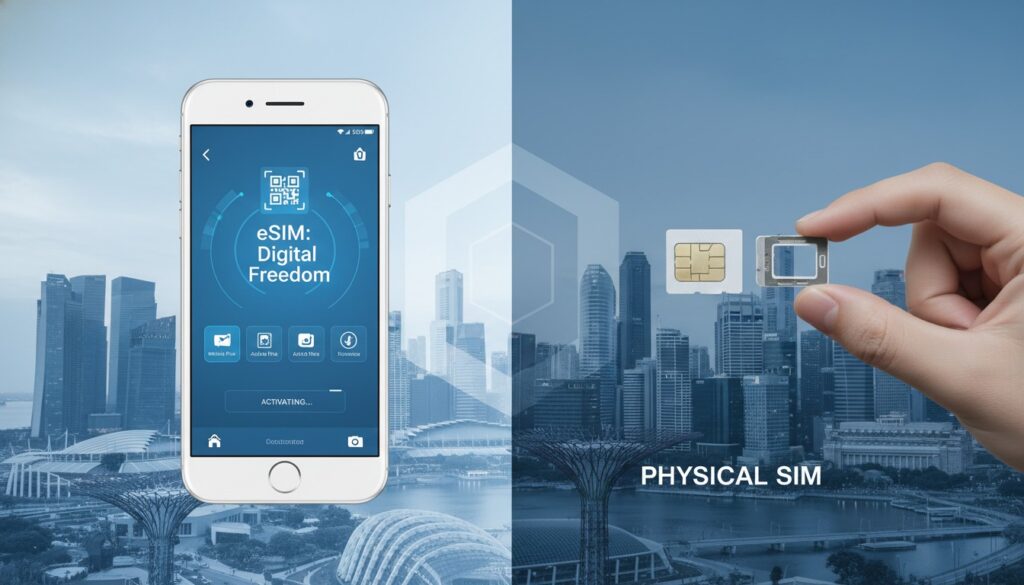
eSIM vs Physical SIM Cards in Singapore: Which is Better for You?
Introduction
Planning a trip to Singapore or considering switching mobile carriers? The choice between eSIM and physical SIM cards has become increasingly important as technology evolves. Singapore, being a tech-forward nation, offers excellent support for both options, but which one truly serves your needs better?
With major carriers like Singtel, StarHub, and M1 now offering comprehensive eSIM services alongside traditional physical SIM cards, the decision isn’t always straightforward. Whether you’re a tourist seeking convenient connectivity, a business traveler requiring reliable service, or a local resident looking to optimize your mobile experience, understanding the differences between these technologies is crucial.
In this comprehensive guide, we’ll explore the advantages and disadvantages of both eSIM and physical SIM cards specifically in the Singapore context, helping you make an informed decision that aligns with your connectivity needs and lifestyle.
What is eSIM Technology?
An embedded SIM (eSIM) is a digital SIM card that’s built directly into your device’s hardware. Unlike traditional physical SIM cards that you insert and remove, eSIMs are programmable chips that can be activated remotely through software.
How eSIM Works in Singapore
In Singapore, eSIM activation is remarkably streamlined:
- Digital activation: Scan a QR code or use carrier apps
- Instant connectivity: No need to visit physical stores
- Multiple profiles: Store several carrier profiles simultaneously
- Remote management: Switch between plans digitally
- iPhone XS and later models
- Google Pixel 3 and newer
- Samsung Galaxy S20 series onwards
- iPad Pro and iPad Air models
- Apple Watch cellular versions
- Transfer between devices instantly
- Keep as a backup
- Share with family members when needed
- Risk of loss or damage: Small size makes them easy to misplace
- Store visits required: Often need to visit carrier outlets for activation
- Single device limitation: Can only be used in one device at a time
- Potential for theft: Physical SIMs can be stolen and misused
- Purchase and activate plans before arrival
- No airport queues or store visits required
- Immediate connectivity upon landing
- Switch carriers without visiting stores
- Activate secondary lines for business use
- Manage multiple international roaming plans
- Maintain personal and business lines simultaneously
- Keep local Singapore number while using international roaming eSIM
- Compare carrier services without switching primary numbers
- Remote deactivation if device is stolen
- Encrypted digital authentication
- No physical removal by unauthorized users
- Carrier-level security protocols
- Eliminates plastic SIM card production
- Reduces packaging waste
- Minimizes transportation requirements
- Supports Singapore’s Green Plan 2030 initiatives
- Older devices lack eSIM capability
- Some budget smartphones don’t include eSIM chips
- Regional device variants may have restrictions
- Requires stable internet for activation
- Software glitches can affect connectivity
- Troubleshooting may require technical support
- Factory resets can complicate reactivation
- Plan availability may differ from physical SIM options
- Pricing structures might vary
- Customer support for eSIM issues may be limited
- Comprehensive postpaid and prepaid eSIM plans
- Tourist-specific eSIM packages
- Business eSIM solutions with enterprise features
- 5G eSIM connectivity across Singapore
- Wide range of postpaid and prepaid options
- Extensive retail network for support
- Traditional activation processes
- Compatible with all device types
- Flexible plan switching capabilities
- International roaming eSIM packages
- IoT and wearable device support
- Digital-first customer experience
- Competitive pricing for eSIM plans
- Quick activation processes
- Business-focused eSIM solutions
- Integration with digital services
- Travel frequently and need flexible connectivity options
- Use modern devices with eSIM support
- Value convenience over traditional processes
- Require dual SIM functionality for business and personal use
- Prioritize security and remote management capabilities
- Support environmental sustainability initiatives
- Use older devices without eSIM compatibility
- Prefer physical control over your connectivity
- Need maximum compatibility across various devices
- Want simple troubleshooting options
- Require immediate device switching capabilities
- Have limited technical expertise with digital services
- Primary line: Physical SIM for daily use and maximum compatibility
- Secondary line: eSIM for travel, business, or specific carrier benefits
- Backup solution: Keep both options available for different scenarios
- Activation fees: Often waived for eSIM plans
- Plan costs: Generally comparable to physical SIM pricing
- Tourist packages: Competitive rates for short-term visitors
- Business plans: Enhanced features may justify premium pricing
- SIM card fees: Usually nominal charges for physical cards
- Replacement costs: Fees apply for lost or damaged cards
- Store visit expenses: Transportation and time costs
- Plan pricing: Standard carrier rates apply
- Device manufacturers increasingly prioritize eSIM integration
- Carriers worldwide are expanding eSIM offerings
- IoT devices predominantly use eSIM technology
- 5G networks optimize for eSIM functionality
- Government initiatives support eSIM adoption
- Infrastructure investments favor digital solutions
- Consumer preferences shift toward convenience
- Business applications increasingly require flexibility
- Backup activation codes: Save QR codes and activation details securely
- Test connectivity: Verify eSIM functionality before traveling
- Update software: Keep device software current for optimal performance
- Contact support: Establish carrier support contacts before issues arise
- Monitor data usage: Use built-in tools to track consumption across profiles
- Protect your SIM: Use SIM card holders to prevent damage
- Keep records: Note SIM card numbers and activation dates
- Plan store visits: Check carrier outlet hours and locations
- Backup contacts: Regularly backup contact information
- Consider upgrades: Evaluate eSIM compatibility when upgrading devices
Device Compatibility
Most modern devices support eSIM technology:
Pro Tip: Always verify eSIM compatibility with your specific device model before making the switch, as some regional variants may not support this feature.
Physical SIM Cards: The Traditional Choice
Physical SIM cards remain the standard for mobile connectivity worldwide. These small, removable chips contain your subscriber information and network authentication data.
Advantages of Physical SIM Cards
Universal Compatibility
Physical SIM cards work with virtually any unlocked mobile device, making them the safest choice for older phones or budget devices.
Easy Troubleshooting
When experiencing connectivity issues, simply removing and reinserting the SIM card often resolves problems quickly.
Physical Control
You have complete physical control over your SIM card, making it easy to:
No Software Dependencies
Physical SIMs don’t rely on software updates or digital authentication, reducing potential technical complications.
Disadvantages of Physical SIM Cards
eSIM Advantages in Singapore’s Digital Landscape
Instant Activation and Convenience
Singapore’s digital infrastructure makes eSIM activation exceptionally smooth:
For Tourists:
For Residents:
Dual SIM Functionality
Many eSIM-compatible devices support dual SIM functionality, allowing you to:
Enhanced Security Features
eSIMs offer superior security compared to physical cards:
Environmental Benefits
Choosing eSIM contributes to environmental sustainability:
Potential eSIM Drawbacks to Consider
Limited Device Support
While growing rapidly, eSIM support isn’t universal:
Technical Complexity
eSIM management can be more complex:
Carrier Limitations
Not all Singapore carriers offer identical eSIM services:
Singapore Carrier Comparison: eSIM vs Physical SIM
Singtel
eSIM Offerings:
Physical SIM Services:
StarHub
eSIM Features:
M1
eSIM Advantages:
Making the Right Choice: Decision Framework
Choose eSIM If You:
Choose Physical SIM If You:
Hybrid Approach
Many users benefit from using both technologies:
Cost Considerations in Singapore
eSIM Pricing Trends
Physical SIM Costs
Future-Proofing Your Choice
Technology Trends
The mobile industry is clearly moving toward eSIM adoption:
Singapore’s Digital Evolution
As a Smart Nation, Singapore continues advancing digital connectivity:
Practical Tips for Singapore Users
For eSIM Users
For Physical SIM Users
Conclusion
The choice between eSIM and physical SIM cards in Singapore ultimately depends on your specific needs, device compatibility, and personal preferences. eSIM technology offers convenience, security, and flexibility that align well with Singapore’s digital-first approach, making it ideal for tech-savvy users, frequent travelers, and those seeking streamlined connectivity solutions.
However, physical SIM cards remain valuable for users with older devices, those preferring traditional approaches, or anyone requiring maximum device compatibility. The robust infrastructure and competitive carrier landscape in Singapore ensure excellent service quality regardless of your choice.
As Singapore continues its Smart Nation journey, eSIM adoption will likely accelerate, but physical SIMs will remain relevant for years to come. Consider your current needs while keeping an eye on future requirements to make the most informed decision.
Call-to-Action
Ready to make your choice? Research your device’s eSIM compatibility and compare current carrier offerings from Singtel, StarHub, and M1. Whether you choose the cutting-edge convenience of eSIM or the reliable simplicity of physical SIM cards, Singapore’s excellent mobile infrastructure ensures you’ll stay connected.
Have questions about eSIM or physical SIM options in Singapore? Share your experiences and concerns in the comments below, and don’t forget to bookmark this guide for future reference when making your next connectivity decision!